
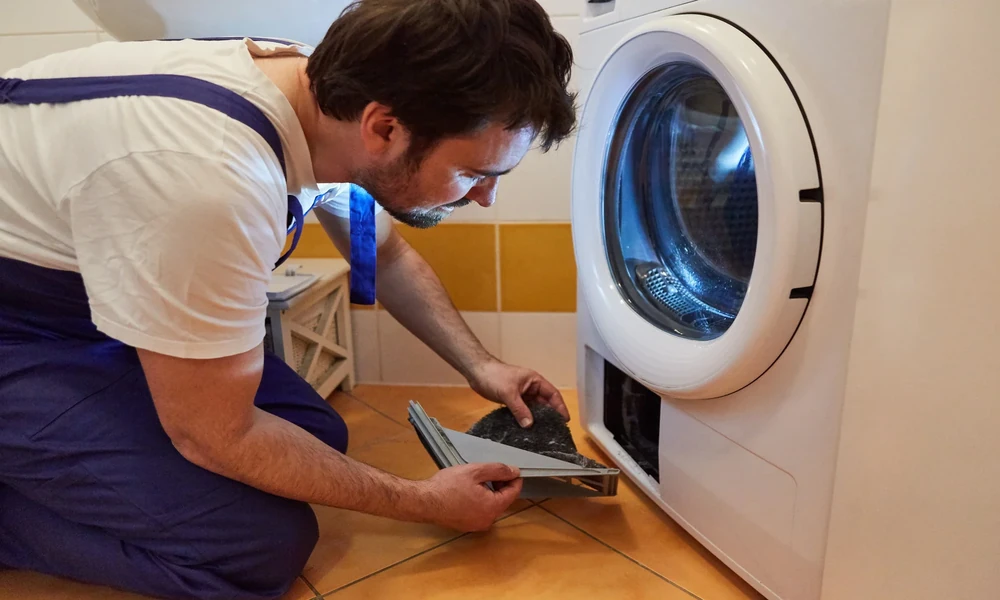
The laundry room may not seem like a dangerous part of the home, but it contains heat, electricity, moving appliances, and materials that can burn. Lint can also collect in places that are difficult to see, including behind the dryer and inside the exhaust system.
A good laundry room safety routine does not need to be complicated. A few habits can help your dryer work properly, make warning signs easier to recognize, and reduce avoidable fire risks. Use the following checklist to make your laundry area safer.
1. Clean the Dryer’s Lint Filter After Every Load
The lint filter is the first line of defense against fibers entering the dryer’s exhaust system. Remove the lint before or after every load rather than waiting until the screen looks full. A thick layer can restrict airflow and make it harder for the dryer to release heat.
Check the screen for tears, warping, or damage while cleaning it. A damaged filter may allow more lint to pass into the dryer and vent. Always put the filter back in its proper position before starting another cycle.
Cleaning the screen is important, but it does not clean the entire vent. Some lint can still pass through the filter and collect farther inside the system.
2. Have the Full Dryer Vent Cleaned Periodically
The dryer vent begins behind the appliance and continues until it reaches an exterior wall or roof. Depending on the home, the duct may travel through a ceiling, attic, crawlspace, or several walls before reaching the outside.
Lint can build up anywhere along that route. As the opening becomes narrower, airflow weakens, drying times increase, and heat may remain trapped inside the system. The U.S. Fire Administration reports that failure to clean was the leading contributing factor in 31% of home clothes-dryer fires from 2018 through 2020.
Short household brushes may help with lint near the opening, but they may not reach a long or complicated duct. Homes with rooftop exits, second-story vents, repeated clogs, or several turns may benefit from professional dryer vent cleaning and airflow testing.
3. Check the Exterior Vent While the Dryer Is Running
Find the point where the dryer vent exits the home. The exterior flap should open when the dryer is operating and close after the appliance stops. You should also be able to feel warm exhaust air leaving the opening.
Weak airflow, a flap that barely moves, or lint collecting around the exit may indicate a restriction. Leaves, nesting material, damaged covers, and stuck dampers can also block the opening. Do not attach a screen that can trap lint over the dryer exhaust.
If the vent exits through the roof or at a high second-story location, inspect it from the ground when possible. Avoid climbing a ladder or walking on a roof without the proper equipment and experience.
4. Inspect the Transition Hose Behind the Dryer
The transition hose connects the back of the dryer to the wall. It can become crushed when the appliance is pushed too close to the wall, creating a narrow point where lint and heat collect. Sharp bends can also reduce airflow.
The U.S. Consumer Product Safety Commission recommends replacing plastic or foil accordion-style ducts with rigid or semi-rigid metal ducting. Metal provides better airflow and is less likely to kink, crush, or trap lint.
Look behind the dryer occasionally to confirm that the connection is secure and the hose has not been damaged. If it is crushed, torn, loose, or made from an unsuitable material, have it replaced before continuing regular use.
5. Keep the Area Around the Dryer Clear
Laundry rooms often become storage areas for baskets, boxes, cleaning products, and spare linens. These items can crowd the appliance and place combustible materials close to a heat source.
Keep the top, back, and sides of the dryer free from clutter. Vacuum lint and dust from the floor, especially behind and underneath the appliance where debris can collect unnoticed. Cleaning products should be stored according to their labels and away from heat.
Make sure the dryer door and controls are also easy to reach. Clear access matters if you need to stop the machine quickly because of an unusual odor, noise, or other problem.
6. Plug the Dryer Directly Into the Correct Wall Outlet
A clothes dryer is a major appliance and should be connected to the proper outlet for its model. Do not power it through an extension cord, plug adapter, or ordinary power strip. These products may not be designed to carry the electrical load required by the appliance.
Check the power cord and plug for cracks, discoloration, exposed wires, looseness, or heat damage. Stop using the dryer and contact a qualified professional if the cord or outlet appears damaged, feels unusually hot, or produces sparks or an electrical odor.
Do not force a three-prong plug into a two-slot outlet or modify the plug to make it fit. An electrician can determine whether the outlet and circuit are appropriate for the dryer.
7. Take Special Care With Oil- or Chemical-Stained Fabrics
Towels and clothing exposed to cooking oil, gasoline, cleaning agents, stains, or finishing oils require extra care. Washing may not remove every trace of a combustible substance, and heat can create a risk even near the end of the drying process.
Follow the fabric, product, and appliance instructions. When possible, wash contaminated items more than once and allow them to air-dry. If a dryer must be used and the manufacturer permits it, use the lowest suitable heat and a cycle with a complete cool-down period.
Do not leave warm, oil-stained materials piled inside a basket or dryer after the cycle. Spread them out so heat can escape, or follow the disposal directions for the product that caused the contamination.
8. Do Not Run the Dryer While Sleeping or Away From Home
It may be convenient to start the dryer before leaving for work or going to bed, but an unattended appliance can develop a problem without anyone noticing the early warning signs. Run it when someone is awake and able to respond.
The National Fire Protection Association advises against operating a dryer when leaving home or going to sleep. This simple habit helps ensure that unusual smells, smoke, repeated shutdowns, and other problems are noticed quickly.
When a cycle ends, remove the clothes rather than leaving them inside for a long time. Allow hot items to cool before folding or placing them into a tightly packed basket.
9. Act Quickly When the Dryer Shows Warning Signs
A dryer often provides clues before a serious problem develops. Do not ignore changes simply because the appliance still turns on and produces heat.
Warning signs include:
- Clothes requiring more than one cycle to dry
- Laundry feeling extremely hot after a cycle
- A hot, humid, or unusually warm laundry room
- A burning, electrical, or scorched-lint smell
- Weak airflow at the exterior vent
- Lint collecting around or behind the appliance
- The dryer shutting off unexpectedly
- Squealing, scraping, or other new sounds
- Smoke, sparks, or visible damage to the cord
Stop using the dryer if you notice smoke, sparks, a burning smell, or another immediate hazard. Leave the home and call 911 if there is an active fire. A company that provides dryer vent inspection and cleaning can address vent restrictions, while damaged electrical, gas, or mechanical components require an appropriately qualified technician.
A Quick Laundry Room Safety Check
Use this short review before starting a load:
- Is the lint filter clean and properly installed?
- Is the drum loaded without being packed too tightly?
- Is the transition hose secure and not crushed?
- Is the area around the dryer free from clutter?
- Are the power cord and outlet free from visible damage?
- Are you staying home and awake while the dryer runs?
- Does the exterior vent open and release air?
- Are the dryer and clothes operating at a normal temperature?
- Are the home’s smoke alarms working?
If something looks, sounds, or smells unusual, pause the laundry and investigate. A delayed load is far better than continuing to operate an appliance that may be overheating or failing.
Make Laundry Room Safety Part of Your Routine
The best laundry room safety habits are the ones you follow consistently. Cleaning the lint screen, keeping the area clear, checking the exterior vent, and responding to changes in dryer performance take only a small amount of time.
The parts you cannot see matter just as much. Periodic professional vent inspection and cleaning can remove lint hidden inside walls, ceilings, attics, and other areas that household cleaning tools may not reach. Together, everyday care and professional maintenance can support safer airflow and more reliable drying.
