
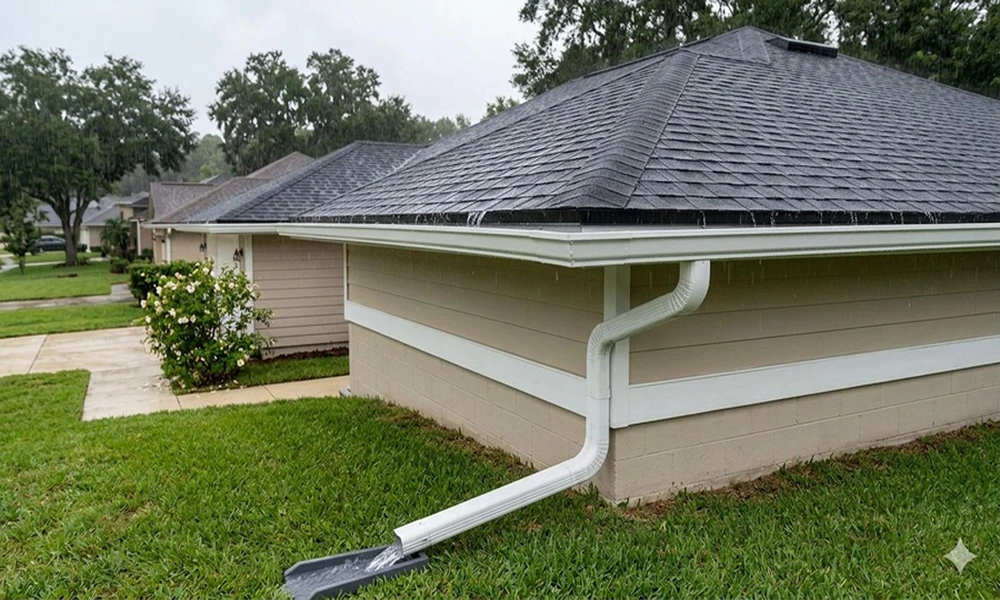
Rainwater collecting near a home’s foundation may seem like a minor inconvenience, especially when puddles disappear after a few hours. However, repeated water accumulation can indicate problems with drainage, landscaping, or the gutter system.
When water consistently collects in the same areas, it can contribute to soil erosion, basement moisture, damaged landscaping, and deterioration of exterior building materials.
Understanding where the water originates is the first step toward finding a lasting solution. Instead of addressing puddles individually, homeowners should examine how rainwater travels from the roof to the ground and away from the property.
Understand Why Water Collects Around Your Foundation
Rainwater naturally follows the slope of the surrounding ground. When a yard slopes toward the house rather than away from it, runoff can collect near the foundation.
Several conditions can contribute to this problem.
Poor soil grading: Soil that settles or slopes toward the structure can direct surface water against foundation walls.
Compacted soil: Dense soil may absorb water slowly, allowing rainwater to remain on the surface.
Blocked drainage paths: Landscape borders, debris, and improperly positioned walkways can prevent runoff from moving away from the house.
Roof drainage problems: Gutters and downspouts may release concentrated water near the foundation instead of directing it toward an appropriate drainage area.
These issues sometimes occur together. For example, a downspout discharging onto poorly graded soil can create persistent pooling even when the gutter itself functions correctly.
Observing the property during moderate rainfall, from a safe position, can help identify where drainage problems begin.
Check Whether Your Gutters Are Contributing to the Problem
Gutters collect rainwater from the roof and direct it toward downspouts. When they function properly, they help control where roof runoff reaches the ground.
However, damaged or poorly maintained gutters can interfere with this process.
Leaves, twigs, and sediment may obstruct water flow. During rainfall, blocked sections can overflow and send water directly onto landscaping or soil near the foundation.
Other warning signs include gutters pulling away from the fascia, water leaking through joints, and downspouts that discharge too close to the house.
A gutter may also appear clean while still draining incorrectly because of improper slope or an obstruction inside the downspout.
Homeowners can identify many visible problems from ground level. Water spilling over the same section during rain, staining below gutter joints, or soil erosion beneath the roofline may indicate that closer inspection is necessary.
Know When Gutter Problems Require Professional Attention
Some drainage problems involve more than removing leaves or repositioning an extension.
Sagging gutter sections, recurring leaks, inadequate drainage capacity, and improperly installed downspouts may require professional evaluation. These conditions can persist despite regular cleaning.
For homeowners dealing with recurring roof drainage problems, consulting a gutter contractor in Indianapolis can help determine whether cleaning, targeted repairs, downspout adjustments, or replacement is the appropriate solution.
A useful professional assessment should examine the entire drainage path rather than concentrating on one visible defect.
For example, replacing a leaking gutter section may solve one problem but leave standing water unresolved if the downspout still empties beside the foundation.
Homeowners should also ask whether existing components can be repaired before committing to extensive replacement. The appropriate solution depends on the condition of the gutter system, the severity of the drainage problem, and the layout of the property.
Improve How Water Moves Across Your Yard
Even a properly functioning gutter system cannot compensate for every landscaping or grading issue.
Once rainwater reaches the ground, the surrounding property must provide a suitable route for it to travel away from the home.
Improving soil grading is one possible approach. The ground immediately surrounding the foundation should generally encourage surface water to move outward rather than toward the structure.
Downspout extensions can also help discharge roof runoff farther from vulnerable areas. However, they should not redirect water toward neighboring properties, walkways, or other structures.
In some yards, a shallow landscaped drainage channel, commonly called a swale, can guide runoff toward a suitable outlet.
Properties with persistent drainage challenges may benefit from professionally designed underground drains or other engineered solutions.
Before making significant changes, homeowners should consider local drainage requirements, underground utilities, and the potential effect on adjacent properties.
The goal is not simply to move water away from one puddle but to manage runoff responsibly throughout the property.
Build a Maintenance Routine That Prevents Recurring Problems
Preventing drainage problems is often easier than responding to water damage after it occurs.
A practical maintenance routine should account for seasonal changes, surrounding trees, and the home’s drainage history.
In spring, homeowners can inspect the exterior for damage associated with winter weather. Visible gutter movement, loose connections, and displaced downspout extensions deserve attention.
During summer storms, watching how water leaves the roof can reveal overflowing gutter sections and areas where runoff accumulates.
Autumn maintenance is particularly important for homes surrounded by deciduous trees. Falling leaves can enter gutters and downspouts, creating blockages that remain unnoticed until heavy rainfall.
After significant storms, homeowners should examine the ground near downspout outlets and foundation walls for new erosion or standing water.
Maintaining a simple record of recurring problem areas can also help. Photographs taken after rainfall may reveal whether conditions are improving or becoming more severe.
Roof-level inspections and gutter cleaning should be left to qualified professionals whenever access conditions make the work unsafe.
Conclusion
Rainwater pooling around a home is often a symptom of a larger drainage problem rather than an isolated landscaping issue.
The most effective approach begins with identifying the source. Gutters, downspouts, grading, soil conditions, and drainage routes all influence how water moves around a property.
By checking these systems together and addressing underlying causes, homeowners can reduce recurring water accumulation and better protect their foundations, landscaping, and exterior materials.
Regular observation and timely maintenance can make drainage problems easier to manage before they develop into more complicated repairs.
